

Lost foam casting, also known as full mold casting, is a casting process in which a foam pattern coated with a refractory material is placed into a sand mold. Dry sand is then compacted around the pattern. During pouring, the high-temperature molten metal causes the foam to vaporize and disappear, allowing the metal to occupy the cavity left by the foam, eventually forming the final casting.
People generally divide the process of lost foam casting into two areas: the "white area" and the "black area". The white area refers to the production of the white foam patterns, including pre-foaming, molding, drying, and bonding (including both pattern segments and gating systems). The black area involves coating and drying, placing the pattern into the sand box, filling with sand, metal melting, pouring, used sand reclamation, and subsequent steps such as shakeout, cleaning, and annealing of the casting.
Compared with green sand casting, lost foam casting offers the following main advantages:
1. High dimensional accuracy of castings
Lost foam casting is a near-net-shape precision forming process. It does not require pattern withdrawal, parting lines, or sand cores, thus eliminating flash, burrs, and draft angles on the castings. This also reduces dimensional deviations caused by core assembly in traditional methods.
2. Design flexibility
It offers great freedom in the structural design of castings. Assemblies previously composed of multiple parts can be cast as a whole by bonding multiple foam pattern segments. Holes or cavities that would typically require sand cores can be directly cast, saving core-making and machining costs and avoiding wall thickness issues caused by core misalignment.
3. Simplified molding process and shortened production cycle
Lost foam casting does not involve pattern withdrawal, mold repair, core setting, or flask closing, which significantly improves molding efficiency and labor productivity.
4. Clean production
The molding sand contains no chemical binders. Foam decomposes into harmless substances at low temperatures, and the organic emissions during pouring are minimal, short in duration, and localized—making them easier to collect and treat.
5. Lower production costs
The sand reclamation system is simpler. Due to high casting precision and reduced machining allowances, costs are lowered. The number of workers needed is reduced, and both pattern and casting production can be automated, lowering labor intensity.
1.jpg)
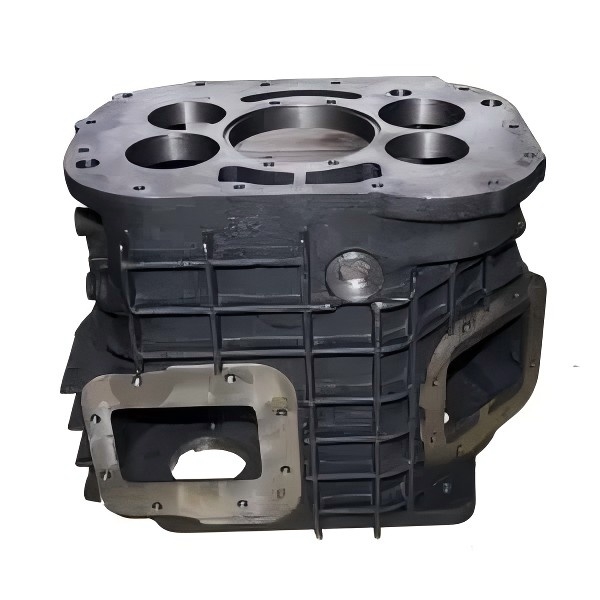
Despite its advantages, lost foam casting—like all casting methods—has its limitations and is not suitable for all castings. Its application should be analyzed case by case, based on the following main factors:
1. Production volume
Since one foam pattern is consumed for every casting, and foam molds are expensive, lost foam casting is better suited for high-volume production. Annual output should generally exceed several thousand units. For low-volume or single-piece castings, foam patterns can be made by cutting, machining, and bonding foam sheets, avoiding mold costs but sacrificing dimensional accuracy and surface quality compared to mold-formed patterns.
2. Casting material
Lost foam casting is applicable to various alloys, including cast iron, cast steel, alloy steel, and non-ferrous metals. In practical use, the process is most effective with the following materials (in order from easiest to more difficult): gray cast iron → non-ferrous alloys → carbon steel → ductile iron → low-carbon steel and alloy steels.
3. Casting size
For enterprises using dry sand molding in LFC, the castings are usually produced in large quantities with standardized sand box sizes. The production line may be fully automated, semi-automated, or mechanized. Once production starts, casting sizes are typically fixed according to the sand box dimensions. Any new casting tasks must conform to these fixed sizes.
4. Casting structure
For structurally complex castings, lost foam casting has clear advantages over traditional sand casting. In fact, LFC can produce complex shapes that are difficult to achieve with conventional methods. In traditional sand casting, more complex castings require more sand cores. Lost foam casting shines in these cases by simplifying the process and improving economic benefits. It is especially suitable for castings that are difficult to mold, demold, or core using conventional techniques.
Post time: Jul-24-2025