

The as-cast microstructure of steel castings depends on their chemical composition and solidification and crystallization processes. These typically exhibit severe dendritic segregation, extremely uneven microstructure, coarse grains, and a Widmanstätten (or reticular) structure. Heat treatment is required to eliminate or mitigate these detrimental effects and improve the mechanical properties of the castings. Furthermore, due to variations in the structure and wall thickness of steel castings, different parts of the same casting exhibit varying microstructures, generating considerable residual internal stresses. Therefore, steel castings (especially alloy steel castings) are generally supplied in a heat-treated state.
Characteristics of Steel Casting Heat Treatment
1) The as-cast microstructure of steel castings often exhibits coarse dendrites and segregation. During heat treatment, the heating temperature should be slightly higher than that of forged steel parts of similar composition, and the austenitization holding time should also be appropriately extended.
2) The as-cast structure of some alloy steel castings is severely segregated. In order to eliminate its influence on the final performance of the castings, homogenization treatment measures need to be taken.
3) For steel castings with complex shapes and large differences in wall thickness, cross-section effects and casting stress factors must be considered during heat treatment.
4) When heat treating steel castings, they must be stacked reasonably according to their structural characteristics to avoid deformation of the castings as much as possible.
Main process elements of heat treatment of steel castings
The heat treatment of steel castings consists of three stages: heating, insulation and cooling. The process parameters are determined to ensure product quality and save costs.
1. Heating
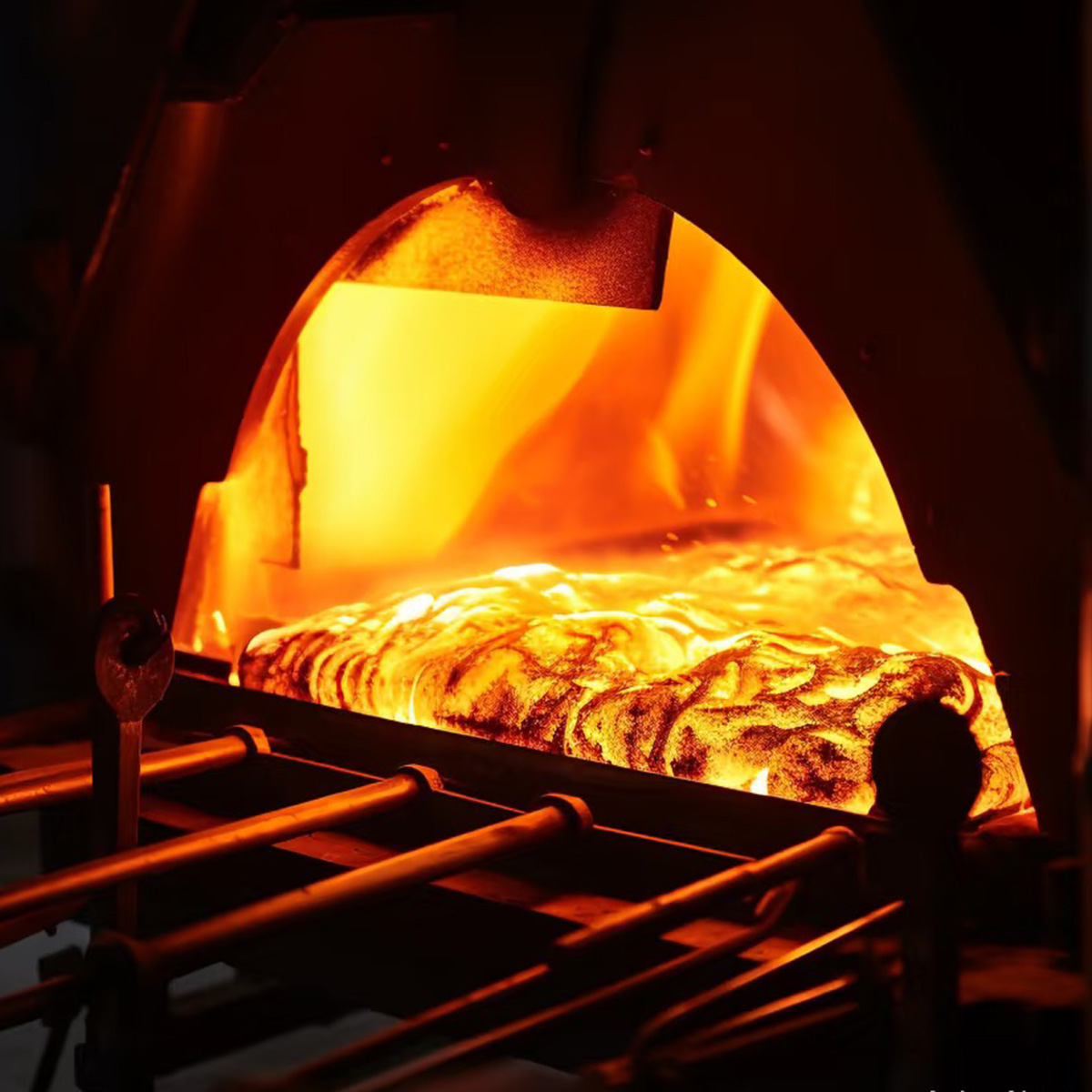
Heating is the process with the highest energy consumption in the heat treatment process. The main technology in the heating process is to select the appropriate heating method, heating rate and charging method.
(1) Heating rate
For general steel castings, the heating rate can be unlimited and the maximum power of the furnace can be used for heating. Using a hot furnace can greatly shorten the heating time and production cycle. In fact, under rapid heating conditions, there is no significant temperature lag between the surface and the core of the casting. Slow heating will lead to reduced production efficiency, increased energy consumption, and severe oxidation and decarburization of the casting surface. However, for some castings with complex shapes and structures, thick walls, and the tendency to generate large thermal stresses during heating, which may lead to deformation or cracking, the heating rate should be controlled. Generally, slow heating at low temperatures (below 600°C) or staying in low or medium temperature zones for one or two times can be adopted. Rapid heating can still be used in high temperature zones.
(2) Heating methods
There are radiation heating, salt bath heating, and induction heating for heating steel castings. The principles for selecting the heating method are fast and uniform, easy to control, and efficient and low-cost. Generally, the structural dimensions, chemical composition, heat treatment process, and quality requirements of the castings should be considered.
(3) Loading method
The stacking method of the castings in the furnace should be given sufficient attention. The basic principle is to make full use of the effective space, ensure uniform heating conditions, and prevent deformation of the castings.
2. Holding Temperature
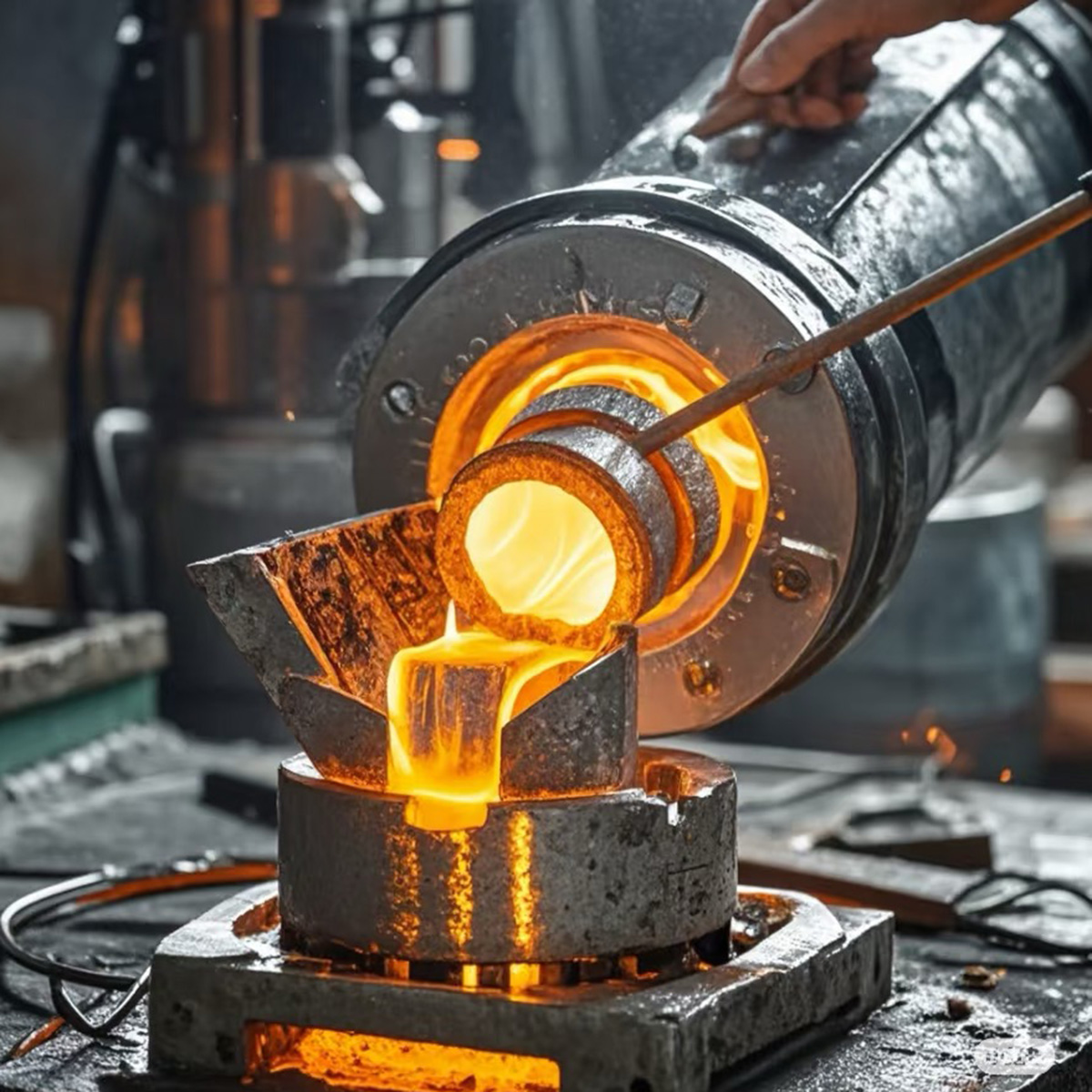
The holding temperature for austenitizing steel castings should be selected based on the chemical composition and required performance of the cast steel. It is generally slightly higher (approximately 20°C higher) than for forged steels of similar composition. For hypoeutectoid steel castings, the principle is to ensure rapid dissolution of carbides into austenite while maintaining fine austenite grains. The holding temperature is generally 30-50°C above the Ac3 temperature. Normalizing temperatures are slightly higher than annealing or quenching temperatures. Hypereutectoid steel castings should be heated to above the Acm temperature during normalizing. Quenching should be performed below the Acm temperature and above the Ac1 temperature to avoid excessive retained austenite. For cast steels with a significant tendency to grain growth (such as manganese steel), the quenching holding temperature should be kept at the lower end. For thick-section castings, the austenitizing holding temperature is generally kept at the upper end.
Two factors should be considered when determining the holding time for heat treatment of steel castings: achieving uniform temperature between the surface and core of the casting, and achieving microstructure homogeneity. Therefore, the holding time depends primarily on factors such as the casting's thermal conductivity, wall thickness, and alloying elements. Generally, alloy steel castings require longer holding times than carbon steel castings. Wall thickness is often the primary factor in estimating holding time. As a rule of thumb, hold for 30 to 60 minutes per 25 mm of wall thickness. For castings thicker than 25 mm, extend the holding time by 30 minutes for each additional 25 mm. The holding time for tempering and aging treatments should take into account factors such as the purpose of the heat treatment, the holding temperature, and the diffusion rate of the elements.
3. Cooling
After holding, steel castings can be cooled at varying rates to complete phase transformations in the steel, achieve the desired metallographic structure, and meet specified performance specifications. Generally speaking, increasing the cooling rate is beneficial for achieving a good microstructure and grain refinement, thereby improving the steel's mechanical properties.
However, excessive cooling rates can easily induce significant stress in the casting, potentially causing deformation or cracking in complex castings. There are generally no strict requirements for cooling after tempering and holding. However, for some low-alloy cast steels that are sensitive to temper brittleness, cooling after tempering and holding is particularly important. Rapid cooling is recommended to quickly pass through the temper brittleness zone and avoid reducing the toughness of the cast steel.
Common cooling media for heat treatment of steel castings include air, oil, water, brine, and molten salt.
Post time: Oct-10-2025