

1. Solution Heat Treatment of Wear-Resistant High-Manganese Steel Castings – Water Toughening
Wear-resistant high-manganese steel has a large amount of precipitated carbides in its as-cast structure, resulting in low toughness and prone to fracture during use.
The primary purpose of solution heat treatment of high-manganese steel castings is to eliminate carbides within the as-cast structure and on grain boundaries, resulting in a single-phase austenite structure. This improves the strength and toughness of the high-manganese steel and expands its application range.
Water Toughening Temperature
The water toughening temperature depends on the composition of the high-manganese steel and is typically between 1050°C and 1100°C. High-manganese steels with high carbon or alloy content, such as ZG120Mn13Gr2 and ZG120Mn17 steels, should be treated at the upper end of the water toughening temperature. However, excessively high water toughening temperatures can lead to severe decarburization on the casting surface and promote rapid grain growth, affecting the performance of the high-manganese steel.
Heating Rate
Manganese steel has a lower thermal conductivity than ordinary carbon steel. High-manganese steel castings experience greater stress during heating, making them more susceptible to cracking. Therefore, the heating rate should be determined based on the wall thickness and shape of the casting. Generally, thin-walled simple castings can be heated at a faster rate; thick-walled castings should be heated more slowly. To reduce deformation or cracking during heating, a preheating process at around 650°C is often used to minimize the temperature difference between the inside and outside of thick-walled castings and ensure uniform furnace temperature. The heating process is then rapidly heated to the water-toughening temperature.
Holding Time
The holding time depends primarily on the wall thickness of the casting to ensure complete dissolution of carbides in the as-cast structure and homogenization of the austenite. Typically, the holding time is calculated as 1 hour for a casting with a wall thickness of 25mm.
Cooling
The cooling process significantly impacts the performance and microstructure of the casting. During water quenching, the temperature of the castings before entering the water must be above 950°C to prevent carbide reprecipitation. Therefore, the time between castings leaving the furnace and entering the water should not exceed 30 seconds, and the water temperature should be maintained below 30°C. The maximum water temperature after entering the water should not exceed 50°C. High temperatures significantly degrade the mechanical properties of high-manganese steel.
During water quenching, the water volume must be at least eight times the weight of the casting and the sling. If non-circulating water is used, the water volume should be increased regularly. It is best to use clean, circulating water or pool water agitated with compressed air. When using a hanging basket for quenching, a swinging basket can be used to accelerate cooling of the casting.
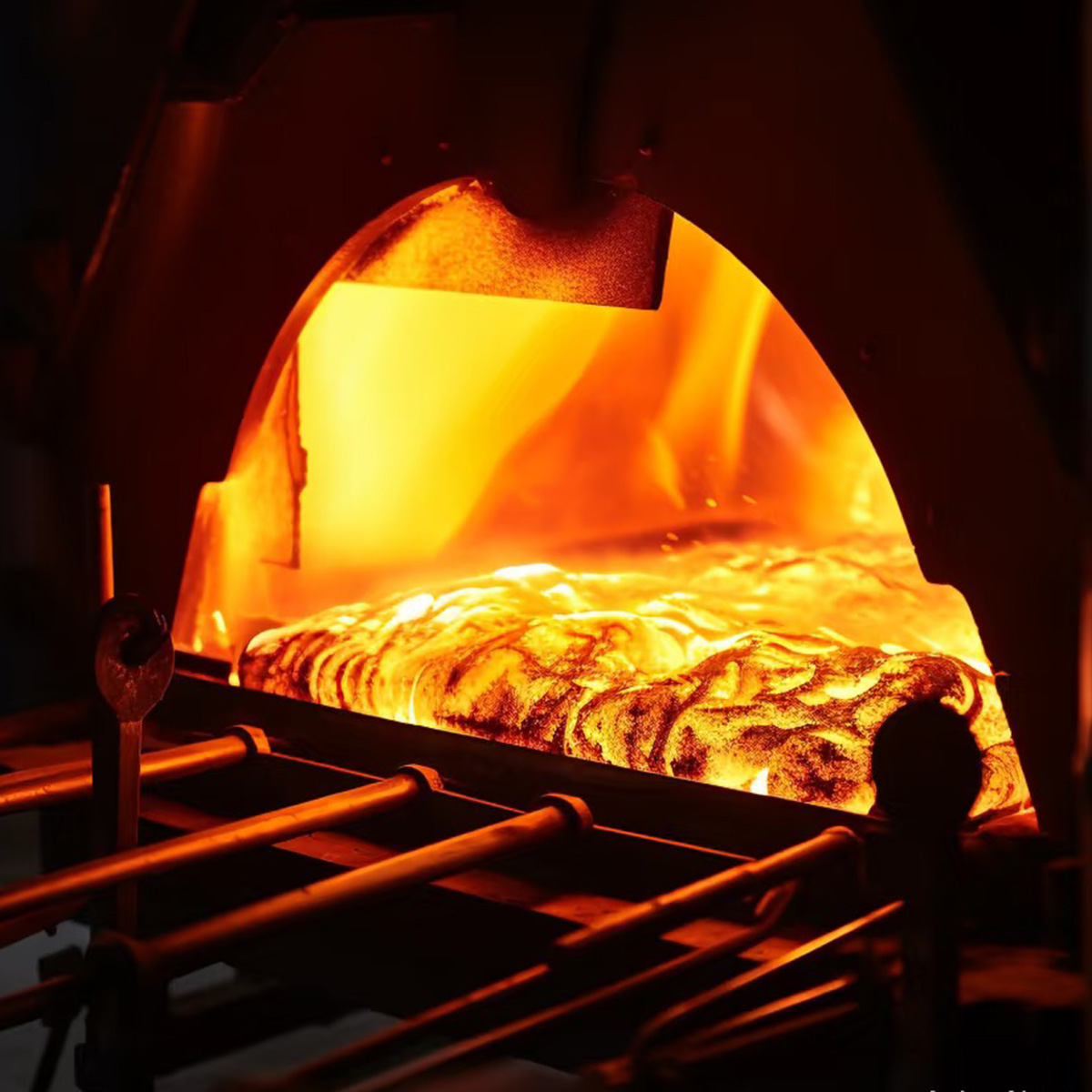
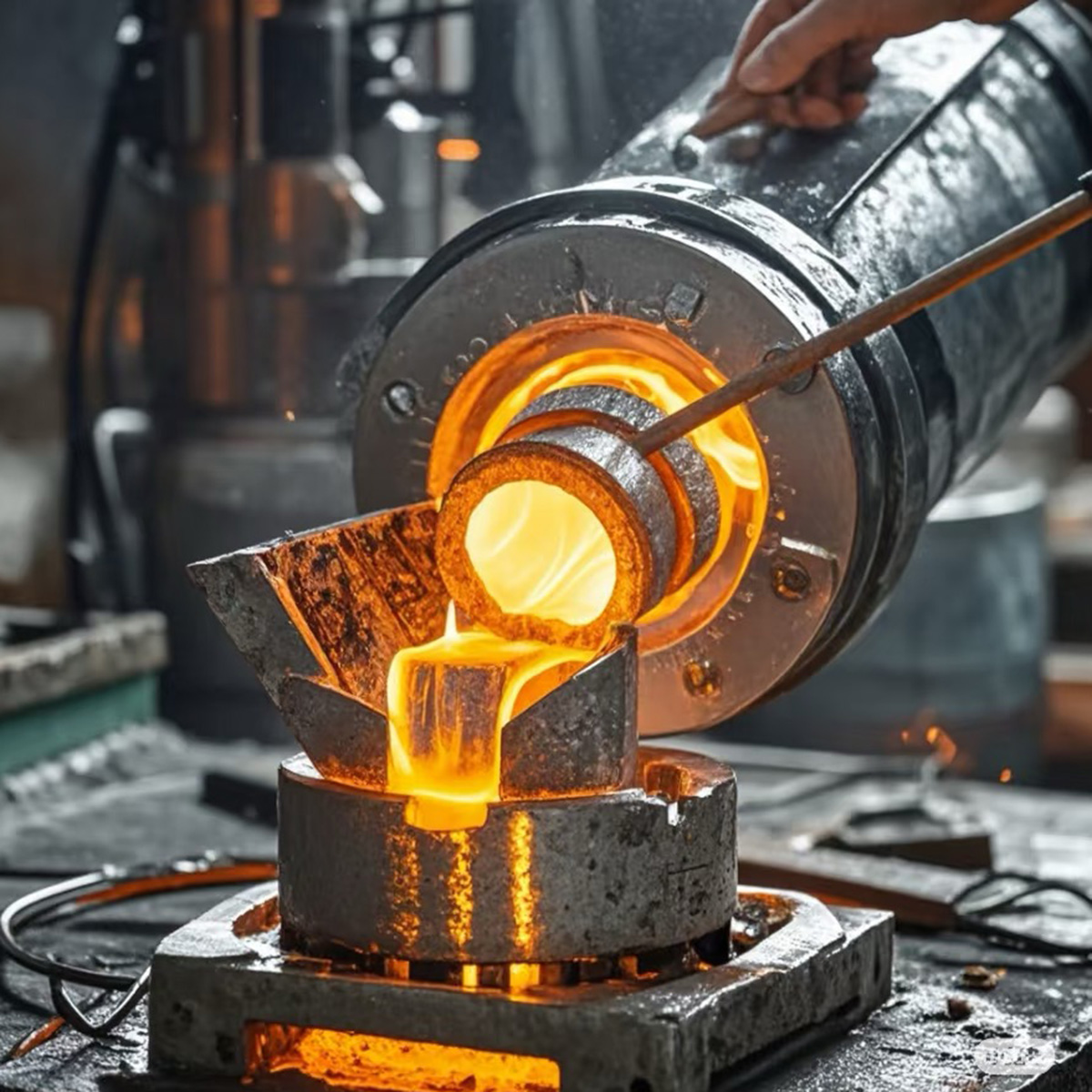
Trolley-type heat treatment furnaces are commonly used for water quenching of high-manganese steel. Automatic tipping or hanging basket quenching methods are commonly used for quenching castings. The former can easily cause deformation in large and complex, thin-walled parts and is more difficult to remove from the water tank after water quenching. The latter makes it easier to remove the casting after water quenching, but consumes more hanging baskets.
2. As-Cast Residual Heat Treatment of Wear-Resistant High-Manganese Steel Castings
To shorten the heat treatment cycle, the as-cast residual heat can be utilized for water toughening of high-manganese steel.
The process is as follows: the casting is removed from the mold at 1100-1180°C. After core removal and sand removal, the casting is allowed to cool to 900-1000°C. It is then placed in a furnace heated to 1050-1080°C, held for 3-5 hours, and then water-cooled. This treatment simplifies the heat treatment process and reduces the cooling time of the casting in the mold, but it is somewhat difficult to operate in production.
3. Precipitation Strengthening Heat Treatment of Wear-Resistant High-Manganese Steel Castings
The purpose of precipitation strengthening heat treatment of wear-resistant high-manganese steel is to obtain a certain number and size of dispersed carbide second-phase particles in the high-manganese steel through heat treatment, based on the addition of appropriate amounts of carbide-forming elements (such as molybdenum, tungsten, vanadium, titanium, niobium, and chromium). This strengthens the austenite matrix and improves the wear resistance of the high-manganese steel. However, this heat treatment process is complex and increases production costs.
4. Microstructure of High-Manganese Steel After Water-Tempering
After water-tempering, if carbides are completely eliminated, high-manganese steel forms a single austenite structure. This structure is only possible in thin-walled castings. Small amounts of carbides are generally permitted within austenite grains or on grain boundaries.
Carbides in high-manganese steel can be divided into three types based on their formation:
① Undissolved carbides, which are carbides in the as-cast structure that were not dissolved during water-tempering.
② Precipitated carbides, which precipitate during the cooling process due to insufficient cooling rates during water-tempering.
③ Overheated carbides, which are eutectic carbides that precipitate due to excessively high heating temperatures during water-tempering. The first two types of carbides can be eliminated through further heat treatment, but eutectic carbides formed by overheating cannot be eliminated by further heat treatment. Castings deemed unqualified due to excessive eutectic carbides must be scrapped and are not permitted to undergo further heat treatment.
5. Heat Treatment of Wear-Resistant Medium-Chromium Steel Castings
The purpose of heat treatment of wear-resistant medium-chromium steel castings is to obtain a martensitic matrix structure with high strength, toughness, and hardness, thereby improving the steel's strength, toughness, and wear resistance.
Wear-resistant medium-chromium steel, due to its high chromium content, has high hardenability. It is typically austenitized at 950-1000°C, then quenched in air and promptly tempered. To ensure high hardness and avoid temper brittleness, it is typically tempered at 200-300°C.
6. Heat Treatment of Wear-Resistant Low-Alloy Steel Castings
Wear-resistant low-alloy steel castings are heat treated using water quenching, oil quenching, or air quenching, depending on the alloy composition and carbon content. Pearlite wear-resistant steel used in certain applications is heat treated with normalizing and tempering. Wear-resistant low alloy steel castings are usually quenched at 850~950°C and tempered at 200~300°C to obtain a martensitic matrix with high strength, toughness and hardness to improve the wear resistance of the steel.
Post time: Sep-04-2025