

The existence of pores in cast iron castings not only reduces the effective cross-sectional area of the cast iron parts, but also causes stress concentration around the pores, becoming the source of cracks in the material fracture. The most serious is that the pores are strip-shaped and sharp-angled, and are densely distributed in the surface layer of the cast iron castings, which is the most harmful and greatly reduces the mechanical properties of the cast iron castings, especially the impact toughness and fatigue strength. The counter pressure of the precipitated gas during the solidification of the cast iron parts hinders the shrinkage of the molten iron, causing micro-shrinkage and reducing the density of the cast iron castings, so that some cast iron castings that need to undergo water pressure testing are scrapped due to leakage.
Precipitation pores are generally found at the last solidification of the cast iron castings, and there are more near the riser. The gases that form precipitation pores in cast iron castings are mainly oxygen, nitrogen, hydrogen, etc. As the temperature drops, the solubility of the gas in the molten iron decreases.
1. Formation and prevention of precipitation pores
The dissolution of gas in molten iron is a reversible process. When the temperature is lowered, the dissolved gas is in a supersaturated state, and the gas can diffuse to the surface of the molten iron and leave the adsorption state (evaporation). However, under actual production conditions, due to the rapid cooling, the amount of gas precipitated in this form is greatly limited, and it generally exists or is eliminated in the form of bubbles or compounds with other elements.
The conditions for the supersaturated gas dissolved in the molten iron to form bubbles are:
① The sum of the partial pressures of various gases in the bubble (total gas pressure) is greater than the external pressure acting on the bubble.
② The partial pressure of a certain gas dissolved in the molten iron should be greater than the partial pressure of the gas in the bubble, so that the gas can automatically diffuse to the bubble and continue to grow. To meet this condition, it mainly depends on the reduction of the molten iron temperature.
③ There must be a bubble core that is larger than a certain critical size and exists stably. A large number of non-metallic inclusions in the molten iron, gases formed and involved during smelting, furnace pretreatment or pouring, as well as linings, mold walls, etc., may become the basis of the non-spontaneous core of the bubble, and bubbles can easily form on these surfaces.
After the gas nucleus attached to the surface of the foreign inclusion is formed, the gas dissolved in the molten iron will automatically diffuse to the bubbles due to the pressure difference. When the bubble grows to a certain critical size, it will detach from the surface and float up. Sometimes the bubbles attached to the surface of non-metallic inclusions can float up with the inclusions. The smaller the bubble, the slower the floating speed. In order for the bubble to float up and be removed in time, the bubble diameter should generally be greater than 0.01~0.001cm.
The molten iron cools down quickly in the mold, and it is difficult for the bubbles to float up, or the surface of the casting has solidified, and the bubbles are not removed in time, resulting in pores.
The most fundamental way to prevent precipitation pores is to reduce the amount of air absorbed by the molten iron; the second is to remove the gas it contains or prevent the gas from precipitating. For example, scrap steel should be cleaned and rusted by the drum; coke and iron materials should not be piled in the open air; furnace linings and pouring tools must be fully dried; inoculants should be added after baking to increase the pouring temperature; increase the cooling rate of cast iron castings, etc.
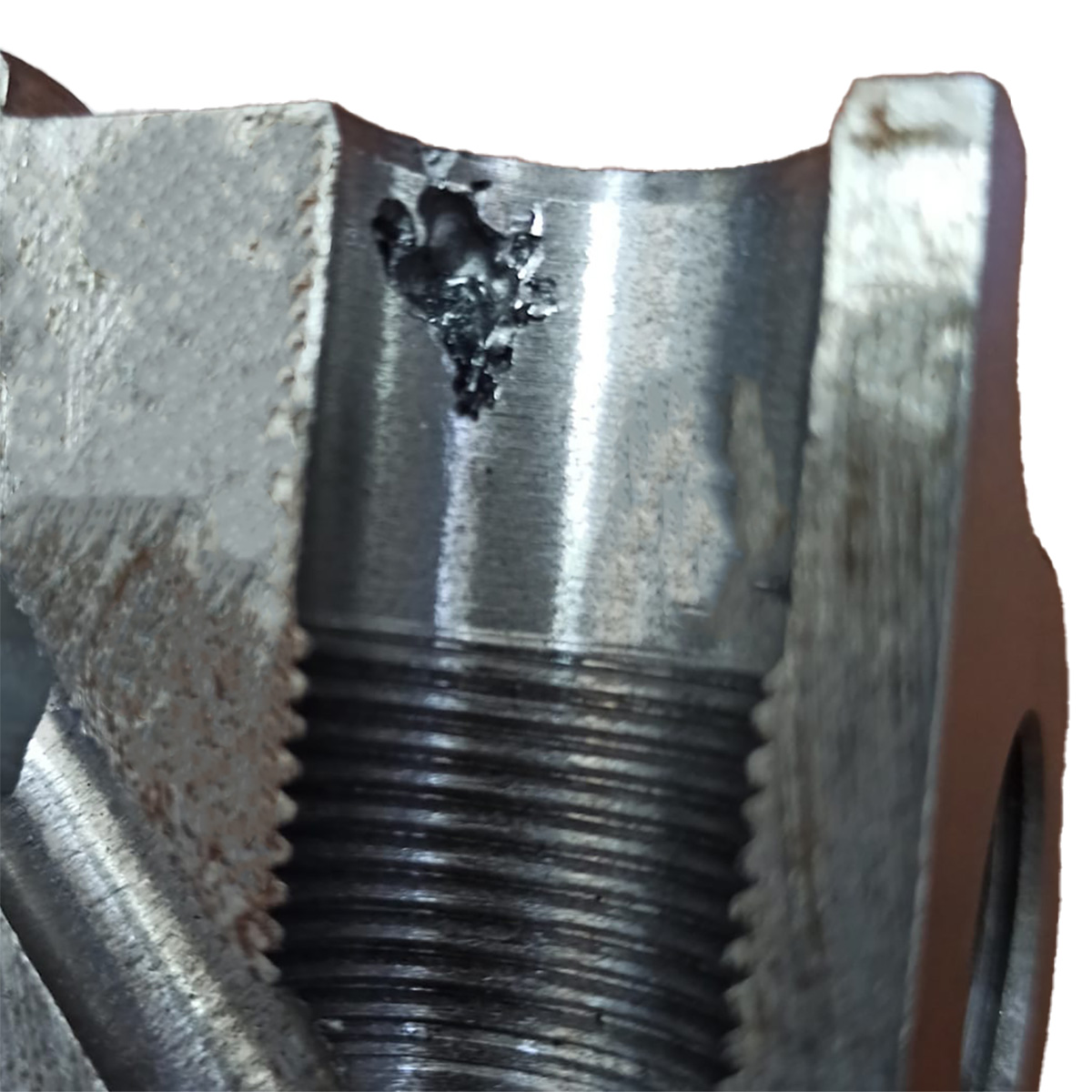
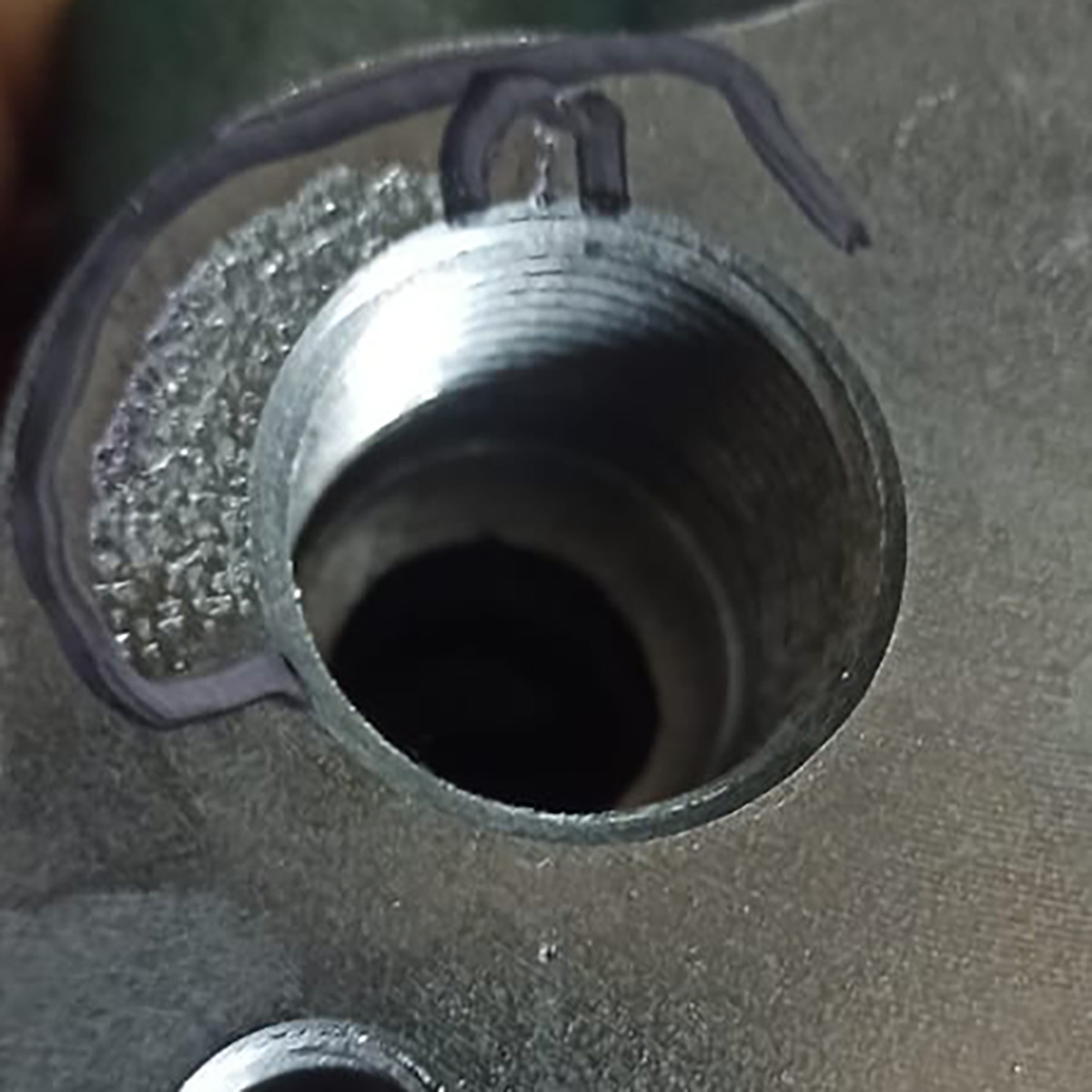
2. Formation and prevention of reactive pores
Pores produced by the chemical reaction between the molten iron and the mold or inside the molten iron and the gas released are called reactive pores. They are often distributed 1~3mm below the surface of the cast iron, so they are generally called subcutaneous pores.
The formation of subcutaneous pores is related to the chemical reaction at the molten iron-mold interface. Under the action of high-temperature molten iron, the water in the mold is evaporated, and the crystal water in the clay is decomposed to produce a large amount of water vapor. Elements such as Fe, C, Si, Mn, Mg, and AI in the molten iron will react with water vapor to produce gasification reactions.
Since the causes of the formation of subcutaneous pores are relatively complex, there is no unified understanding so far. One reason may be that the gas phase at the solid-liquid interface contains more hydrogen, and the front of the solid-liquid interface forms an oversaturated concentration and a very high precipitation pressure during solidification. The various oxides produced by the interface reaction can serve as the core of the bubble. After the bubbles are formed on these surfaces, the hydrogen, nitrogen and other gases in the molten iron diffuse into the bubbles and grow. Another possible reason is that during the cooling process of the molten iron in the ladle and during pouring, the △F° of manganese and iron decreases, which enhances their oxidation tendency and interacts with oxygen in the atmosphere, water vapor or CO2 at the inner interface of the casting mold to form oxides.
It is generally believed that subcutaneous pores are mainly produced during the chemical reaction and gas precipitation process at the interface of the molten iron and the casting mold. After the magnesium-treated ductile iron molten iron is poured into the casting mold, it is easier to react with the water vapor in the mold to produce subcutaneous pores.
Post time: Jul-17-2025