

Heat Treatment Characteristics of Gray Iron Castings
Due to gray cast iron's high silicon content and the presence of graphite in its metallographic structure, its phase transformations during heating and cooling exhibit unique characteristics:
Eutectoid transformation occurs within a certain range;
The presence of graphite causes the carbon content of austenite to vary with heating temperature and holding time;
The high silicon content and the presence of graphite facilitate cementite decomposition and the transformation of pearlite to ferrite.
Generally speaking, heat treatment only alters the matrix structure, not the graphite shape. Therefore, heat treatment does not significantly improve the mechanical properties of gray cast iron. This characteristic has led to limited research on gray cast iron heat treatment.
The low plasticity of gray cast iron also makes rapid cooling heat treatment methods difficult to implement.
Common Heat Treatment Processes for Gray Cast Iron
1. Stress Relief
During the cooling process of a casting, various stresses are generated. These, combined with the stresses from the operating load, often exceed the strength of the gray cast iron, leading to cracking in the part or deformation and loss of function. Therefore, high-performance castings require stress relief treatment.
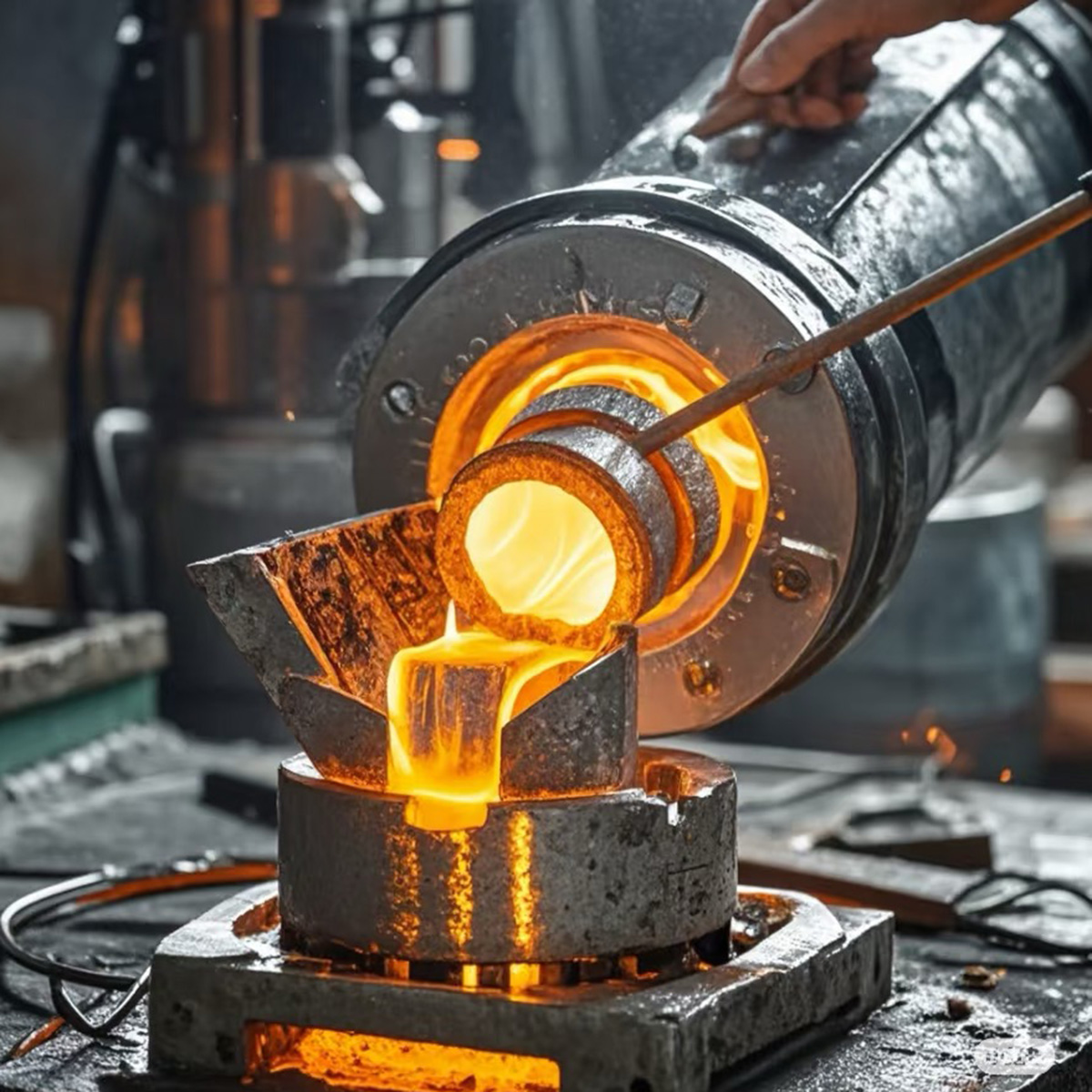
Stress relief treatment refers to the aging heat treatment of gray cast iron, designed to reduce residual stresses within the casting. The principle is to reheat the casting to 530-620°C, using plastic deformation to reduce residual stresses, and then slowly cool it in a furnace to produce a casting with low residual stress. This is the most commonly used heat treatment method for gray cast iron. The higher the aging heat treatment temperature, the more significant the elimination of residual stresses in the casting, and the better the dimensional stability of the casting. However, as the aging temperature increases, the mechanical properties of the casting decrease after aging.
The aging temperature for ordinary gray cast iron is generally between 500-600°C, and for alloy gray cast iron, it is between 550-650°C. The impact of holding time is less significant than that of aging temperature. Generally, the holding time is calculated based on a 25mm thick casting per hour, with a minimum holding time of 2 hours. Strict control of the molten iron composition, pouring process, mold process, and shakeout process (opening time and cooling conditions) can reduce casting stresses. Aging heat treatment is unnecessary for general parts (including automobile internal combustion engine cylinder blocks).
2. Graphitization Annealing
Castings sometimes develop white spots in thin-walled areas or corners. Improper chemical composition control and insufficient inoculation can result in white spots and pitting throughout the casting, making mechanical machining difficult. Graphitization annealing is a remedial measure, decomposing the cementite in the white spots at high temperatures to achieve graphitization.
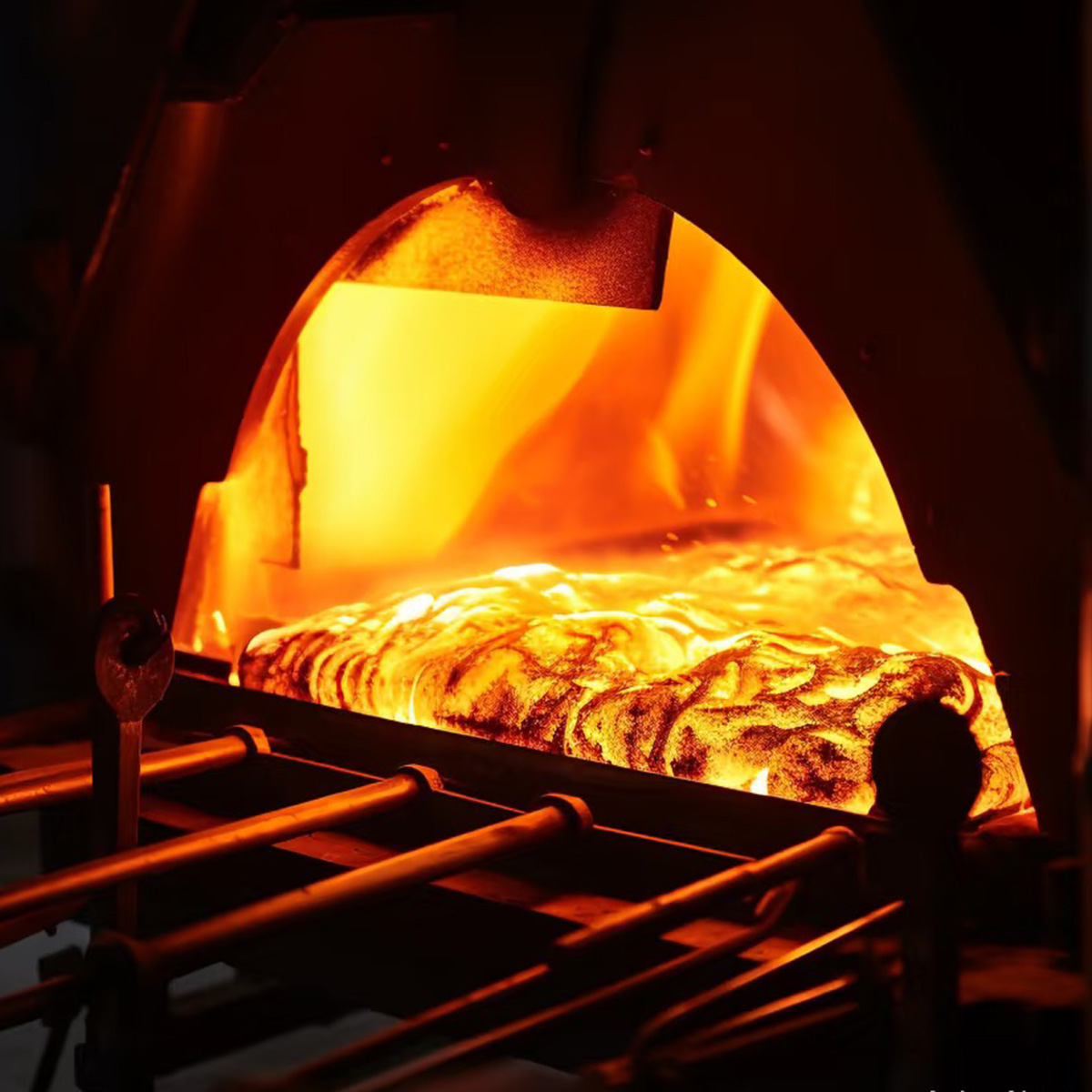
The process involves charging the furnace below 200°C, heating at a rate of 70-100°C/hour to 900-960°C, holding for 1-4 hours (depending on the wall thickness), and then cooling the furnace to the critical temperature before air cooling. If a ferrite matrix is desired, the furnace can be held at 720-760°C for a period of time, then cooled to below 250°C before removal from the furnace.
The high-temperature holding time also depends on the composition. High carbon and silicon content can be shortened, while high sulfur and carbide-stabilizing elements should be extended.
Strict control of the chemical composition and inoculation technique is crucial to prevent the formation of spontaneous or free cementite, rather than relying on graphitization heat treatment to eliminate it.
3. Surface Heat Treatment
Cylinder liners and machine tool guides requiring wear resistance often undergo surface quenching heat treatment. The quenched surface achieves a martensite + graphite structure, and the pearlite matrix can reach a surface hardness of approximately 50 HRC after quenching.
High-frequency quenching is commonly used for gears, cylinder liners, cams, and sprockets. Machine tool guides were previously flame-quenched, but now use medium-frequency quenching.
Electric contact self-cooling quenching is another surface quenching process with the advantages of simple equipment and process operation and low investment.
4. Other Heat Treatments
Normalizing
The heating specifications for normalizing gray cast iron are the same as for graphitizing annealing, differing only in that after holding, cooling is performed in air, not in the furnace. Sometimes (e.g., for thick and large castings or in summer), air or spray cooling is also required. The purpose of normalizing is to eliminate white cast iron, making the casting easier to machinable, or to reduce the amount of ferrite, thereby improving the strength, hardness, and wear resistance of the cast iron.
For gray cast iron requiring surface hardening, if ferrite is present in the original microstructure, a normalizing treatment can ensure the effectiveness of subsequent hardening.
Quenching and Tempering
Gray cast iron with simple shapes and a low risk of cracking can also be quenched and tempered if necessary.
For ordinary gray cast iron with a carbon content of 3.0% to 3.5% by mass and a silicon content of 1.8% to 2.5% by mass, the eutectoid transformation temperature ranges from 760°C to 845°C. The combined carbon content and surface hardness of the matrix vary with quenching heating temperature, so the quenching temperature can be selected as needed, generally between 860°C and 870°C. At this temperature, the combined carbon content is 0.7%, and the overall hardness is between 62 and 67 HRC. Excessively high quenching temperatures will increase the amount of retained austenite and fail to improve hardness.
The quenching medium can be oil, water, or a hot salt bath. Oil is commonly used to prevent cracking and deformation in the casting and prevent underhardening.
The purpose of tempering after quenching is to remove quenching stresses, adjust hardness, and improve toughness. Tempering temperatures are generally between 150°C and 400°C.
After tempering at 370°C, the toughness of gray cast iron reaches that of its original as-cast state, while the matrix hardness remains around 50 HRC and the tensile strength is 35% to 40% higher than the as-cast state. When toughness is not a primary requirement, the tempering temperature can be between 150°C and 260°C, simply to relieve stresses. At this point, the matrix hardness is between 55 and 60 HRC. The primary purpose of the quench-and-temper heat treatment is not to improve the strength of gray cast iron (which can be achieved more economically through alloy additions or reduction of carbon and silicon content), but to increase hardness and improve wear resistance.
Austempering
Gray cast iron can be austempered to achieve a bainitic structure, but due to its relatively low silicon content, the austempering time is shorter than that of ductile iron. This process can achieve tensile strengths as high as 650 MPa and hardnesses as high as 320 HBW, while still maintaining excellent machinability. Notched impact energy is also increased by 2-3 times. The most significant characteristic of austempered gray cast iron is that its vibration damping properties increase with increasing tensile strength. Elements such as nickel, chromium, and molybdenum can shift the C curve of gray cast iron to the right, delaying the onset and end temperatures of the phase transformation, which facilitates the formation of a bainitic structure. It is used in the manufacture of large cylinder liners, gears, high-load bearing brackets, and brake components.
Chemical Heat Treatment
To improve wear resistance, anti-seizure, and fatigue performance, various chemical heat treatment methods can be used on gray cast iron parts with sliding friction surfaces, such as guide rails, hydraulic components, and cylinder liners. This creates a high-hardness layer of tens to hundreds of microns on the surface.
Post time: Oct-24-2025