

To enhance the mould' s resistance to molten metal, reduce the surface roughness of the casting, prevent sand adhesion, and improve the surface quality of the casting, a special mixture is applied to the working surface of the mould. This mixture is known as mould coating.
Basic Composition of Coating
Coatings generally consist of refractory powder, binder, suspending agent, carrier liquid, and additives.
1. Refractory Powder
Refractory powder is the most fundamental component of the coating. With the help of suspending agents, it remains suspended in the carrier liquid and is evenly applied to the working surface of the mould or core. After the carrier liquid evaporates, the binder enables the powder to dry and form a dense coating layer, which protects the working surface. One of the core processes in investment casting is the repeated application and drying of ceramic coatings. Refractory ceramic slurries are commonly used to build the ceramic shell.
2. Carrier Liquid
Also referred to as the carrier or solvent, the carrier liquid dissolves the binder and allows the powder to disperse or suspend in the liquid. Once applied, it helps the coating to form a layer on the working surface of the mould or sand core.
In China, ethanol is commonly used to prepare quick-drying coatings. The water content of ethanol should be less than 1.0% by mass; otherwise, the coating is difficult to ignite, burns incompletely, and may cause gas porosity defects in the casting.
3. Binder
To improve the strength of the coating layer and its adhesion to the mould surface, binders are added.
4. Suspending Agent
Also known as a stabilizer or thickener, its role is to maintain the coating as a uniform suspension, prevent sedimentation, and ensure ease of uniform application.
5. Additives
Additives improve the properties of the coating. These include surfactants, defoamers, preservatives, etc.
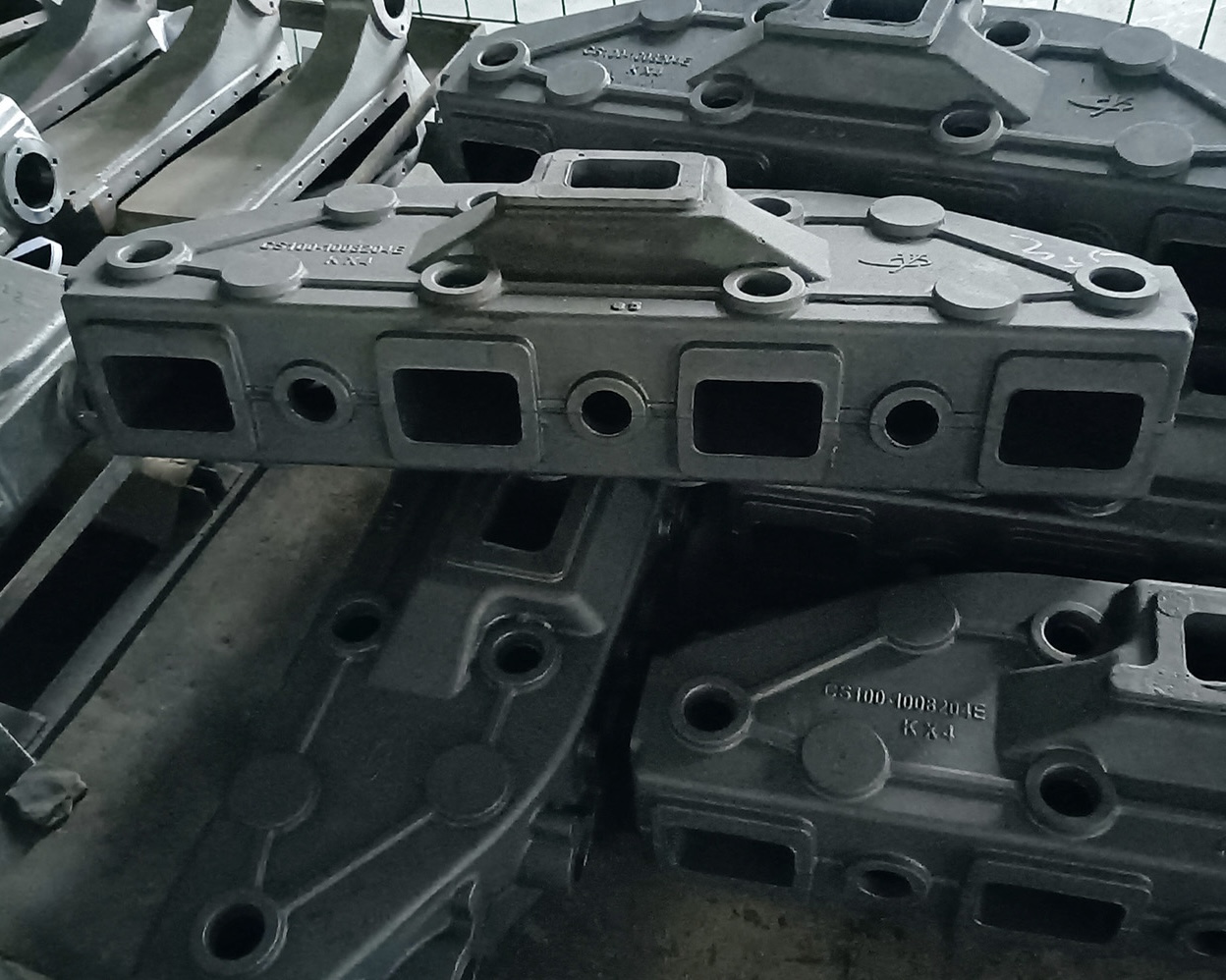
In sand casting, a layer of coating is usually applied to the surface of the mold cavity to improve the surface quality of the casting and to prevent issues such as sand adhesion. For standard gray cast iron parts with low surface requirements, coatings may sometimes be omitted. However, for alloy steel, high-manganese steel, and other demanding castings, high-performance coatings are generally used.
.jpg)
Technological Properties of the Coating
The main technological properties of coatings include loading capacity, brushability, drainage, levelling, and penetrability.
1. Loading Capacity
This refers to the coating' s ability to load well onto the brush without dripping. Good viscosity is required for desirable loading capacity.
2. Brushability
This refers to the smooth application of the coating without a sticky feeling. A coating with good brushability forms a uniform thin layer on the sand mould surface without running or spreading unevenly.
3. Drainage
Refers to the tendency of the coating to flow downward due to gravity when applied on vertical mould surfaces.
4. Levelling
Refers to the coating' s ability to eliminate brush marks on its own after application. If grooves or brush marks on the surface disappear quickly, it indicates good levelling, resulting in a smooth coating surface.
5. Penetrability
This is the coating' s ability to penetrate the pores of the sand mould. It is generally required that the coating penetrates to a certain depth and forms a smooth layer of adequate thickness on the mould surface.
Post time: Jun-12-2025